Introduction
Renting a car can make traveling around India easier, more comfortable, and more flexible. It allows travelers to explore different destinations without depending entirely on buses, trains, or taxis. Whether you are planning a family holiday, a weekend trip, or a business visit, a rental car can offer greater control over your travel schedule.
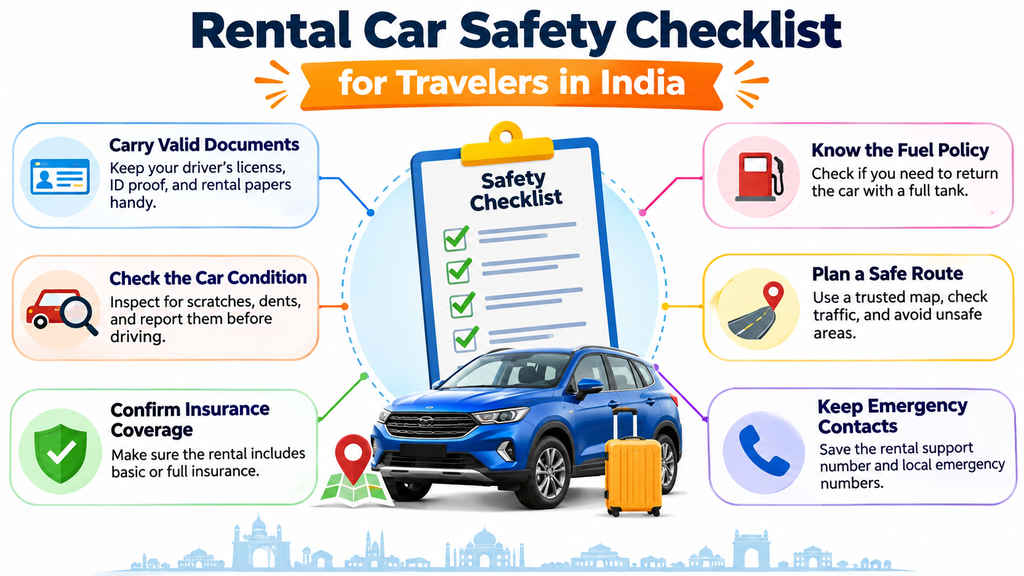
However, driving a rental car requires proper preparation. First-time renters often focus on the rental price and vehicle model. They sometimes forget to check important details such as insurance, fuel policies, vehicle condition, driving documents, and rental agreement terms.
These small details can make a big difference during your journey. A vehicle with damaged tires, faulty brakes, or unclear insurance coverage can create unnecessary trouble. Similarly, ignoring mileage limits or return conditions can increase your final rental expenses.
India also has different driving conditions across cities and tourist destinations. Delhi has busy roads and heavy traffic. Mumbai has limited parking in many areas. Bangalore experiences traffic congestion during office hours. Goa has narrow roads around several villages and beaches.
Therefore, every traveler should inspect a rental vehicle before starting a journey.
This guide explains what to check before driving a rental car in India. It covers documents, insurance, vehicle condition, rental expenses, road safety, and common mistakes. It also explains how travelers can compare vehicle rental options and make better transportation decisions.
Whether you are a tourist, student, working professional, backpacker, or daily commuter, these practical tips can help you enjoy a safer rental experience.
2. Why Renting a Vehicle in India Is a Smart Choice
India has many destinations worth exploring. Travelers can visit historic cities, coastal towns, hill stations, business centers, and rural locations.
However, reaching every attraction through public transportation may not always be convenient. A rental vehicle can provide more freedom and help travelers manage their schedules.
Freedom to Travel at Your Own Pace
A rental car allows you to plan your journey according to your preferences. You can stop at restaurants, visit attractions, and change your route when necessary.
For example, families visiting Jaipur can use a rental car to explore historical attractions and nearby destinations. Travelers in Goa can visit beaches, markets, and local restaurants without arranging separate taxi rides.
Convenient Transportation for Families
Families often carry luggage, shopping bags, and travel essentials. A rental car provides private space and can make longer journeys more comfortable.
It can also help parents manage travel schedules when traveling with children or older family members.
Useful for Business Travel
Working professionals may need transportation for meetings, office visits, and client appointments.
A rental car can help them manage multiple appointments without depending on taxi availability.
Flexible Travel for Tourists
Tourists visiting India often want to explore more than one attraction in a day.
A self-drive rental car can provide flexibility when the renter has a valid driving license, meets the rental requirements, and feels comfortable with local traffic.
Alternative Transportation Through Bike Rentals
Not every journey requires a car. Bike rental in India can be a practical choice for short-distance travel and local sightseeing.
For example, tourists can rent a scooter in Goa, choose a commuter motorcycle in Pune, or explore suitable local routes around Jaipur.
Two-wheeler rental options may also help budget travelers reduce transportation expenses. The right choice depends on the destination, journey length, luggage, and personal comfort.
3. Who Should Consider Renting a Car in India?
Car rentals can serve different transportation needs. However, renters should select a vehicle that suits their travel plans.
First-Time Travelers
People visiting an Indian city for the first time may prefer a rental car for convenient transportation.
Before booking, they should learn about local traffic conditions, parking rules, and navigation options.
Tourists and Families
Tourists can use rental cars for sightseeing and family holidays.
A suitable vehicle can help families visit several attractions while keeping their luggage and travel essentials together.
Students
Students may need temporary transportation for college visits, internships, educational trips, or personal travel.
They should compare rental charges and check the minimum age and driving license requirements.
Working Professionals
Professionals can consider rental vehicles for temporary business travel, client meetings, and work-related journeys.
A rental car can be useful when public transportation does not match their schedule.
Backpackers and Budget Travelers
Backpackers may prefer affordable transportation for local exploration.
Depending on their destination, a scooter or commuter motorcycle may offer better value than a car.
Daily Commuters
People who need temporary transportation can rent a vehicle instead of purchasing one.
Weekly and monthly rental plans may suit people who need a vehicle for an extended period.
4. What Every Traveler Should Check Before Driving a Rental Car
Checking a rental car before driving is one of the most important steps in the rental process.
Never accept a vehicle without inspecting it. Even a short inspection can help identify existing problems and prevent disputes later.
Check the Exterior Condition
Walk around the entire vehicle before accepting it.
Look for scratches, dents, broken mirrors, damaged bumpers, and cracked windows.
Pay attention to the following areas:
- Front and rear bumpers.
- Doors and side panels.
- Windshield and windows.
- Headlights and tail lights.
- Side mirrors.
- Number plates.
- Wheels and tires.
- Roof and boot area.
Take clear photographs of existing damage. Share the photographs with the rental provider before leaving.
Ask the provider to record all visible damage in the vehicle inspection report.
Inspect the Tires
Tires play an important role in vehicle safety.
Check whether all tires have suitable tread depth and appear properly inflated. Look for cuts, cracks, bulges, and unusual wear.
Also check the spare tire, if provided.
Make sure the vehicle includes the necessary tools for changing a tire. If you are unfamiliar with the process, ask the rental provider for assistance information.
Test the Brakes
Brakes should respond properly during driving.
Before entering busy traffic, test the brakes carefully in a safe location.
Look for warning lights on the dashboard. Pay attention to unusual sounds, vibrations, or a soft brake pedal.
If anything feels wrong, do not continue driving. Ask the provider to inspect or replace the vehicle.
Check the Lights and Indicators
Working lights help you communicate with other road users.
Test the following:
- Headlights.
- High-beam lights.
- Tail lights.
- Brake lights.
- Left and right indicators.
- Reverse lights.
- Hazard lights.
- Interior lights.
Proper lighting becomes especially important during nighttime journeys and poor weather.
Check the Windshield Wipers
Rain can reduce visibility and make driving difficult.
Test the windshield wipers and washer system before starting your trip.
Check the windshield for cracks that may affect visibility. Make sure the washer fluid is available.
This is particularly important during monsoon travel in Mumbai, Goa, Chennai, and Kolkata.
Inspect the Interior
A clean and properly maintained interior can make your journey more comfortable.
Check the seats, seat belts, mirrors, dashboard, air conditioning, door locks, windows, and storage areas.
Make sure every passenger has a working seat belt.
Also check whether the vehicle includes a working horn and other essential controls.
Check the Fuel Level
Record the fuel level before collecting the car.
Some rental providers require renters to return the vehicle with the same fuel level. Others may follow different fuel arrangements.
Take a photograph of the dashboard to avoid confusion during return.
Understand the Vehicle Controls
Different car models have different controls.
Before driving, learn how to operate the headlights, indicators, wipers, parking brake, air conditioning, and infotainment system.
If the vehicle has an automatic transmission, understand its gear positions.
Never experiment with unfamiliar controls while driving.
5. Documents You Should Check Before Renting a Car
Documentation is another important part of vehicle rental in India.
Rental providers usually verify identity and driving eligibility before handing over a vehicle.
Requirements can vary according to the provider and vehicle category.
Valid Driving License
Carry a valid driving license that permits you to drive the rented vehicle.
Check its expiry date and ensure the license category matches the vehicle.
Do not assume that a two-wheeler license permits you to drive a car.
Government Identity Proof
Rental providers may request an accepted government identity document.
Common examples include:
- Aadhaar card.
- Passport.
- Voter ID.
- Other accepted government identification.
Keep the required identification details ready before booking.
Address Proof
Some providers may request additional address information.
Ask the provider which documents they accept and whether digital copies are sufficient.
Documents for International Tourists
Foreign visitors should confirm their driving eligibility before renting a car in India.
Depending on their country and circumstances, they may need a valid foreign driving license and an International Driving Permit.
The relevant international convention requirements, vehicle category, and permit validity matter. Travelers should verify the applicable rules before driving.
Vehicle Documents
Before accepting the car, confirm that the required vehicle documents are available.
These may include:
- Registration Certificate.
- Valid insurance certificate.
- Pollution Under Control certificate, where applicable.
- Fitness and permit documents, where required.
The vehicle must also be legally authorized for the rental use.
Security Deposit Confirmation
Many rental providers collect a refundable security deposit.
Confirm the amount, payment method, refund period, and possible deductions.
Always request a payment receipt.
6. Understand the Rental Agreement Before Driving
A rental agreement explains the responsibilities of the renter and vehicle provider.
Read the complete agreement before signing it.
Rental Duration and Return Time
Check the pickup date, pickup time, return date, and return location.
Understand the provider’s late-return policy.
Mileage Restrictions
Some rental plans include a daily kilometre limit.
Additional charges may apply when you exceed that limit.
Estimate your travel distance before selecting a rental plan.
Fuel Policy
Understand whether you must return the car with the same fuel level or follow another arrangement.
Check whether fuel costs form part of the rental price.
Insurance Coverage
Ask about the insurance policy and what it covers.
Understand third-party coverage, damage protection, deductibles, and exclusions.
Do not assume that every accident or vehicle damage situation receives full insurance protection.
Cancellation and Refund Conditions
Read the cancellation policy before paying.
Check whether the provider offers a full refund, partial refund, or booking credit under different cancellation conditions.
Intercity Travel Permission
Some rental vehicles have geographical restrictions.
If you plan to travel from Delhi to Jaipur or Mumbai to Pune, confirm whether the provider permits the journey.
Also ask about interstate permissions, additional charges, and applicable documents.
7. Insurance and Emergency Support: What Should You Know?
Insurance is an important part of rental car safety.
Before accepting a vehicle, understand the insurance arrangements and the support available during an emergency.
Understand Third-Party Insurance
Third-party motor insurance covers specified liabilities arising from injury, death, or property damage to third parties, subject to policy terms.
Ask the provider to confirm that the vehicle has valid insurance suitable for its intended rental use.
Check Damage Protection
Some rental arrangements include additional protection against certain types of vehicle damage.
However, coverage may have conditions and exclusions.
Ask about:
- Accident damage.
- Theft protection.
- Windshield damage.
- Tire damage.
- Deductibles.
- Driver negligence exclusions.
- Unauthorized vehicle use.
Read the policy documents instead of relying only on verbal promises.
Confirm Roadside Assistance
A breakdown can happen during any journey.
Ask whether the rental provider offers roadside assistance, towing, emergency repairs, or replacement vehicles.
Save the provider’s contact number before starting your trip.
Know What to Do During an Accident
If an accident happens, prioritize safety.
Move to a safe location when possible. Contact emergency services if anyone needs medical assistance.
Inform the rental provider and follow the insurance reporting procedure.
Take photographs and preserve relevant details. Do not make unauthorized repairs or leave the incident unreported.
8. Driving Safety Tips for Indian Roads
Driving conditions vary across India.
Travelers should understand local traffic patterns and follow basic safety practices.
Follow Traffic Rules
Follow speed limits, traffic signals, lane markings, and road signs.
Avoid dangerous overtaking and sudden lane changes.
Never use a mobile phone while driving.
Wear Seat Belts
The driver and passengers should wear seat belts.
Check that every seat belt works before starting the journey.
Children should use suitable child restraints according to their age and size.
Avoid Overspeeding
Drive according to road conditions and your experience.
Heavy traffic, sharp turns, narrow roads, and unexpected obstacles require extra attention.
Do not rush to reach your destination.
Check Weather Conditions
Rain can make roads slippery and reduce visibility.
During monsoon travel, avoid flooded roads and areas with poor visibility.
Check weather conditions before planning longer journeys.
Plan Your Route
Use a reliable navigation system to plan your journey.
However, do not follow navigation instructions blindly.
Watch for road closures, restricted roads, construction work, and local traffic signs.
Avoid Driving When Tired
Fatigue reduces concentration and reaction time.
Take regular breaks during long journeys.
Never drive after consuming alcohol or substances that affect your ability to operate a vehicle safely.
Keep Emergency Contacts Ready
Save the following information:
- Rental provider’s phone number.
- Emergency contact details.
- Insurance assistance number.
- Roadside assistance number.
- Local emergency services.
India uses 112 as its emergency response number.
9. Cost of Renting a Car in India
Rental car prices depend on the vehicle, location, rental duration, and season.
A small hatchback generally costs less than a premium sedan or SUV.
The following figures are indicative daily budgeting ranges, not confirmed prices or guaranteed market averages.
| Vehicle Category | Approximate Daily Rental Cost |
|---|---|
| Hatchback | ₹1,000–₹2,000 |
| Sedan | ₹1,500–₹3,000 |
| Compact SUV | ₹2,000–₹4,000 |
| Premium SUV | ₹3,500–₹7,000 |
Actual prices can vary between providers and locations.
Additional Rental Expenses
Do not calculate your budget using the daily rental charge alone.
Consider these expenses:
- Security deposit.
- Fuel charges.
- Additional kilometre fees.
- Delivery and pickup charges.
- Late-return fees.
- Parking charges.
- Tolls and applicable road fees.
- Optional protection charges.
- Applicable taxes.
Consider Bike Rental for Short Journeys
A car may not be necessary for every local trip.
Travelers who want to explore nearby attractions can consider bike rental in India.
Scooters and commuter motorcycles may provide affordable transportation for suitable short-distance journeys.
Before booking a bike, compare the rental price, helmet availability, insurance, fuel conditions, and license requirements.
10. Common Mistakes Travelers Should Avoid
First-time renters sometimes overlook small details that can create major problems.
Avoid these common mistakes before starting your journey.
Booking Without Comparing Prices
Do not select the first rental option you find.
Compare vehicle models, rental charges, mileage limits, deposits, and insurance conditions.
The cheapest advertised price may not offer the lowest final cost.
Skipping the Vehicle Inspection
Never accept a rental car without checking its condition.
Photograph existing damage and report problems before driving away.
Ignoring Insurance Conditions
Some renters assume that insurance covers every type of damage.
Always check the policy, exclusions, deductibles, and reporting requirements.
Forgetting to Check Fuel Levels
Record the fuel level during pickup.
Otherwise, you may face unnecessary confusion during the return process.
Not Reading the Rental Agreement
Understand the complete rental policy.
Pay attention to mileage, late returns, cancellation, fuel, and intercity travel conditions.
Choosing the Wrong Vehicle
Select a car according to passenger numbers, luggage, route, and driving experience.
A large SUV may not be practical for every city journey.
Ignoring Parking Rules
Parking restrictions differ between cities and locations.
Check permitted parking areas to avoid fines or towing.
Returning the Vehicle Without an Inspection
Inspect the car with the provider during return.
Record the final fuel level and vehicle condition. Request confirmation that the vehicle has been returned successfully.
11. Bike Rental vs Public Transport vs Taxi vs Rental Car
Travelers can choose from several transportation options in India.
Each option offers different benefits depending on the journey and budget.
| Factor | Bike Rental | Public Transport | Taxi | Rental Car |
|---|---|---|---|---|
| Cost | Low to moderate | Usually low | Moderate to high | Moderate to high |
| Convenience | High for local trips | Depends on routes | High for direct travel | High |
| Flexibility | High | Limited | Moderate to high | High |
| Comfort | Depends on weather and vehicle | Varies | Generally comfortable | Private and comfortable |
| Travel Experience | Independent local exploration | Local public travel | Direct transportation | Independent road travel |
| Best Use Cases | Short trips and sightseeing | Budget city travel | Airport transfers and direct trips | Family trips and road journeys |
When Is Bike Rental Better?
Bike rental can be useful for short journeys and local sightseeing.
For example, travelers in Goa may prefer scooters for visiting nearby beaches and restaurants.
When Is Public Transport Better?
Public transport can be a budget-friendly option.
Delhi Metro, Mumbai local trains, and city buses provide useful connections across many urban areas.
When Is a Taxi Better?
Taxis can suit travelers who do not want to drive.
They are also useful for airport transfers, heavy luggage, and journeys with older family members.
When Is a Rental Car Better?
Rental cars can be useful for families, groups, and travelers planning several destinations.
They provide private space and greater control over travel schedules.
12. How MotoShare Europe Can Help Travelers
Choosing the right rental vehicle requires careful planning.
Travelers should compare available vehicles, rental conditions, and provider information before confirming a booking.
MotoShare Europe aims to connect users with vehicle rental options through its vehicle-sharing and rental platform.
Here are some useful features to consider when exploring rental services.
Easy Online Booking
Online booking can simplify the process of finding a rental vehicle.
Travelers can explore available options and review vehicle details before making a decision.
Wide Range of Vehicles
Different travel plans require different vehicles.
A family may need a self-drive car, while a solo traveler may prefer a scooter or motorcycle.
A platform offering multiple vehicle categories can help users compare suitable choices.
Transparent Pricing
Clear pricing helps travelers manage their transportation budgets.
Before confirming a booking, review rental charges, security deposits, mileage restrictions, fuel policies, and additional fees.
Verified Vehicle Owners
Provider verification can help create greater trust between renters and vehicle owners.
Travelers should still verify the vehicle’s documents, insurance, and rental eligibility before accepting it.
Flexible Rental Options
Some travelers need a vehicle for one day. Others may require one for a week or longer.
Flexible rental durations can help users choose according to their travel plans.
Vehicle Options for Different Travel Needs
Travelers visiting Delhi, Mumbai, Bangalore, Goa, Jaipur, Pune, Hyderabad, Chennai, and Kolkata may have different transportation requirements.
The availability of suitable vehicles depends on the platform’s active listings and local providers.
Before booking through MotoShare Europe, check the actual service coverage and vehicle availability for your destination.
13. Frequently Asked Questions (FAQs)
1. What should I check before driving a rental car?
Check the tires, brakes, headlights, indicators, mirrors, windshield, seat belts, and fuel level.
Also inspect existing damage and review the insurance policy and rental agreement.
2. What documents are required to rent a car in India?
Rental providers generally request a valid driving license and government identification.
Some may also require address proof and additional verification documents.
3. Can tourists rent a car in India?
Yes. Tourists can rent cars if they meet the applicable driving license, identity, and rental conditions.
Foreign visitors should confirm their driving eligibility before booking.
4. Is an International Driving Permit necessary in India?
Foreign visitors may need an International Driving Permit depending on their circumstances and applicable international requirements.
They should confirm the rules for their country and vehicle category before driving.
5. Is insurance included in rental car charges?
Insurance arrangements differ between providers.
Ask whether the vehicle has valid third-party insurance and whether additional damage protection is available.
6. How much does it cost to rent a car in India?
Indicative daily rental estimates range from ₹1,000 to ₹2,000 for hatchbacks and ₹1,500 to ₹3,000 for sedans.
SUV and premium vehicle prices may be higher. Actual rates depend on the provider and location.
7. Should I take photographs before accepting a rental car?
Yes. Photograph scratches, dents, tires, mirrors, windows, and other visible damage.
Share the photographs with the provider and request written confirmation of existing damage.
8. What happens if a rental car breaks down?
Contact the rental provider immediately.
Follow their breakdown assistance instructions and check whether towing, repairs, or a replacement vehicle are included.
9. Can I take a rental car to another city?
This depends on the rental agreement.
Some providers allow intercity travel, while others restrict vehicles to specific locations.
Always obtain permission before planning an intercity or interstate journey.
10. Can I rent a car without paying a security deposit?
Some providers may offer different deposit arrangements.
However, many rental services require a refundable security deposit. Confirm the conditions before booking.
11. What should I do if I damage a rental car?
Inform the rental provider immediately.
Take photographs, document the incident, and follow the insurance reporting process.
Check the agreement to understand your financial responsibilities.
12. Can I drive a rental car outside the city?
Some rental agreements permit longer journeys, while others impose geographical restrictions.
Check the permitted travel area and any additional charges before starting your trip.
13. Is a rental car better than a taxi for sightseeing?
A rental car can provide more flexibility when visiting several attractions.
A taxi may be more convenient when you do not want to drive or manage parking.
Compare the total costs and travel requirements before choosing.
14. Can I rent a bike instead of a car in India?
Yes. Bike rentals and scooter rentals can be practical alternatives for local sightseeing and short-distance travel.
Choose a suitable vehicle and check license, insurance, helmet, and rental requirements.
15. How can I make my rental car journey safer?
Inspect the vehicle, check insurance, carry the required documents, and understand the rental agreement.
Follow traffic rules, wear seat belts, avoid overspeeding, and take breaks during long journeys.
14. Conclusion
Driving a rental car can make traveling around India more convenient and flexible. It allows tourists, students, professionals, and families to explore destinations according to their own schedules.
However, a successful rental experience requires more than choosing an attractive car at a good price.
Every traveler should inspect the vehicle, verify important documents, understand insurance coverage, and read the rental agreement before driving. Checking tires, brakes, lights, seat belts, and fuel levels can also help prevent unexpected problems.
Remember that Indian road conditions differ between cities and destinations. Plan your journey carefully, follow traffic rules, and choose a vehicle that matches your driving experience.
If you only need transportation for short local trips, consider a scooter or motorcycle rental instead. Bike rental can help travelers explore suitable destinations without paying for a larger vehicle.
MotoShare Europe provides a platform for exploring vehicle rental and sharing options. Review the available services, compare suitable vehicles, and understand the booking conditions before making your decision.
