Introduction
Europe is one of the most exciting travel destinations in the world. From the romantic streets of Paris and the scenic countryside of Italy to the breathtaking mountain roads of Switzerland and the coastal highways of Spain, there is no shortage of places to explore. While trains and buses are popular across Europe, renting a car gives travelers the freedom to discover destinations at their own pace.
For first-time visitors, the idea of renting a car in Europe may seem confusing. Questions about driving licenses, insurance, road rules, tolls, and rental costs often make travelers uncertain about where to start.
This beginner-friendly guide explains everything you need to know about renting a car in Europe. Whether you are a tourist, student, business traveler, backpacker, or family vacationer, this guide will help you make informed decisions and enjoy a hassle-free road trip.
Why Renting a Car in Europe Is a Smart Choice
Renting a car can completely transform your European travel experience.
Freedom to Explore
Unlike public transportation schedules, a rental car allows you to travel whenever and wherever you want.
Access to Hidden Destinations
Many beautiful villages, countryside attractions, vineyards, and coastal routes are difficult to reach by train or bus.
Time Savings
A rental car can significantly reduce travel time between multiple destinations.
Comfortable Family Travel
Families traveling with children often find rental cars more convenient than carrying luggage across train stations.
Cost-Effective for Groups
When traveling with friends or family, sharing rental and fuel costs can be cheaper than purchasing multiple train tickets.
Who Should Rent a Car in Europe?
A rental car can be ideal for:
Tourists
Explore famous attractions and hidden gems at your own pace.
Students
Perfect for weekend trips, internships, and educational tours.
Working Professionals
Provides flexibility during business trips and extended stays.
Families
Convenient for traveling with children and large amounts of luggage.
Backpackers
Allows exploration of remote regions not easily accessible by public transport.
Benefits of Renting a Car for First-Time Travelers
Flexible Travel Plans
You can change your itinerary without depending on transportation schedules.
More Sightseeing Opportunities
Stop whenever you find a scenic viewpoint, local café, or cultural attraction.
Enhanced Comfort
Travel in a private environment with your own luggage and belongings.
Better Rural Access
Explore destinations beyond major cities.
Memorable Road Trips
Europe is home to some of the world’s most scenic driving routes.
Popular European Destinations Best Explored by Car
Italy
Explore Tuscany, the Amalfi Coast, and Sicily.
France
Discover Provence, the French Riviera, and wine regions.
Spain
Drive through Andalusia, Costa Brava, and northern Spain.
Germany
Enjoy scenic routes and famous sections of the Autobahn.
Switzerland
Experience breathtaking alpine roads and mountain villages.
Portugal
Explore coastal towns and countryside landscapes.
Types of Rental Cars Available in Europe
Economy Cars
Ideal for solo travelers and couples.
Compact Cars
Suitable for city driving and short trips.
Sedans
Comfortable for families and business travelers.
SUVs
Great for mountain regions and larger groups.
Luxury Cars
Perfect for premium travel experiences.
Electric Vehicles
Environmentally friendly and increasingly available throughout Europe.
Vans and Minibuses
Suitable for large families and group travel.
How to Choose the Right Rental Car
Consider Group Size
Choose a vehicle with enough seating and luggage capacity.
Evaluate Travel Distance
Long-distance road trips may require more comfortable vehicles.
Check Fuel Efficiency
Fuel costs vary across Europe, making efficient vehicles more economical.
Consider Road Conditions
Mountain routes may require more powerful vehicles.
Think About Parking
Smaller vehicles are often easier to park in historic European cities.
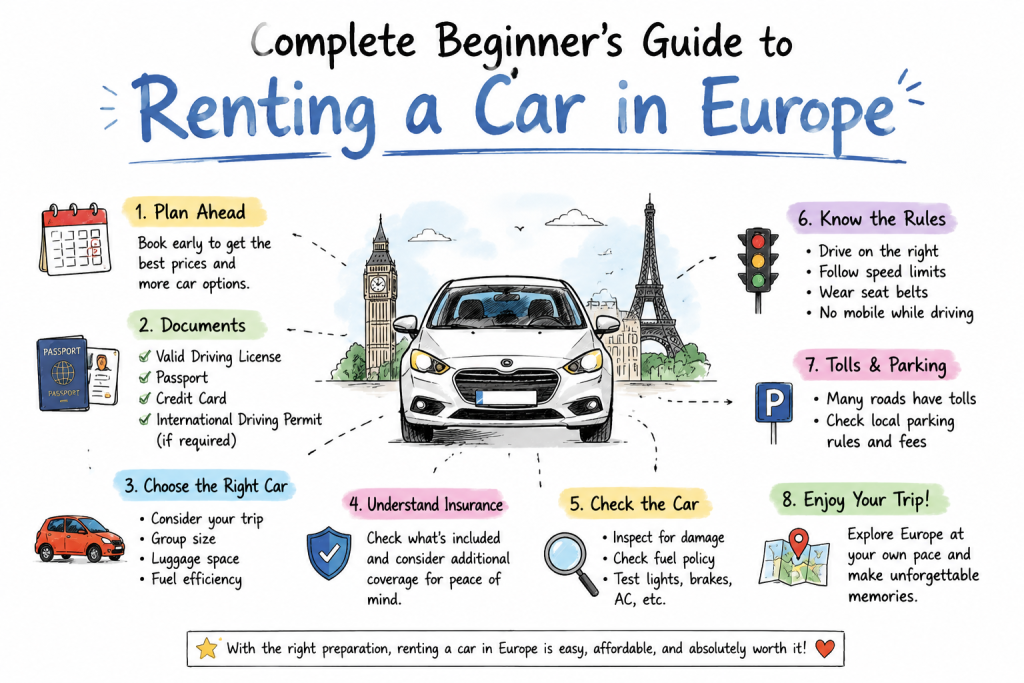
Documents Usually Needed to Rent a Car in Europe
Valid Driving License
Most rental companies require a valid driving license held for at least one year.
International Driving Permit
Many European countries recommend or require an International Driving Permit alongside your national license.
Passport
Used for identity verification.
Credit Card
Often required for security deposits.
Age Requirements
Most companies require drivers to be at least 21 years old, though age restrictions vary.
Understanding Car Rental Insurance
Insurance is one of the most important aspects of renting a car in Europe.
Collision Damage Waiver
Helps reduce financial responsibility for vehicle damage.
Theft Protection
Provides coverage if the vehicle is stolen.
Third-Party Liability Insurance
Required in most European countries.
Personal Accident Insurance
Offers protection for drivers and passengers.
Additional Coverage
May include tire, windshield, and roadside assistance protection.
Things to Check Before Renting a Car
Vehicle Condition
Inspect the car carefully and document existing damage.
Fuel Policy
Understand whether the vehicle must be returned with a full tank.
Mileage Limits
Check whether mileage restrictions apply.
Insurance Details
Review what is included and excluded.
Emergency Support
Confirm roadside assistance availability.
Rental Agreement Terms
Read all terms before signing.
Driving Rules Every Tourist Should Know
Drive on the Correct Side
Most European countries drive on the right side of the road.
Follow Speed Limits
Speed limits vary by country and road type.
Seat Belts Are Mandatory
Drivers and passengers must wear seat belts.
Avoid Mobile Phone Use
Hands-free systems are often required.
Respect Local Traffic Laws
Rules differ between countries.
Toll Roads in Europe
Many European countries use toll roads.
Countries with common toll systems include:
- France
- Italy
- Spain
- Portugal
- Austria
- Switzerland
Always carry a payment method and understand local toll requirements.
Parking Tips for European Cities
Parking can be challenging in historic city centers.
Use Public Parking Facilities
Parking garages often provide safer options.
Understand Parking Zones
Many cities use color-coded parking systems.
Avoid Restricted Areas
Certain city centers restrict vehicle access.
Use Parking Apps
Local parking applications can simplify finding available spaces.
Estimated Cost of Renting a Car in Europe
Rental costs vary by country, season, vehicle type, and rental duration.
| Vehicle Type | Average Daily Cost |
|---|---|
| Economy Car | €25 – €60 |
| Compact Car | €35 – €80 |
| Sedan | €50 – €120 |
| SUV | €70 – €180 |
| Luxury Vehicle | €150 – €500+ |
| Electric Vehicle | €50 – €150 |
Additional costs may include:
- Insurance upgrades
- Fuel
- Tolls
- Parking fees
- Additional drivers
- Child seats
Common Mistakes First-Time Travelers Should Avoid
Booking at the Last Minute
Prices are often higher closer to travel dates.
Ignoring Insurance Details
Understand coverage before driving.
Choosing the Wrong Vehicle Size
A large vehicle may be difficult to maneuver in narrow streets.
Not Checking Fuel Policies
Unexpected fuel charges can increase costs.
Overlooking Cross-Border Rules
Some rentals require special permission for international travel.
Failing to Document Existing Damage
Always take photos before leaving the rental location.
Car Rental vs Public Transport vs Taxi
| Factor | Rental Car | Public Transport | Taxi |
| Cost | Moderate | Low | High |
| Flexibility | Excellent | Limited | Moderate |
| Comfort | High | Moderate | High |
| Privacy | High | Low | High |
| Rural Access | Excellent | Limited | Moderate |
| Group Travel | Excellent | Moderate | Expensive |
| Scenic Routes | Excellent | Limited | Moderate |
| Best For | Road Trips | City Travel | Short Trips |
Road Trip Tips for Europe
Plan Routes in Advance
Research road conditions and attractions.
Download Offline Maps
Useful in areas with poor connectivity.
Carry Essential Documents
Keep licenses, passports, and rental agreements accessible.
Understand Fuel Types
Use the correct fuel specified by the rental company.
Check Weather Conditions
Mountain and winter driving conditions can change rapidly.
Sustainable Travel and Electric Vehicles
Europe is rapidly expanding electric vehicle infrastructure.
Benefits include:
- Lower emissions
- Reduced fuel expenses
- Access to environmentally friendly travel options
- Growing charging networks
Travelers interested in sustainable tourism should consider electric vehicle rentals.
How MotoShare Europe Can Help Travelers
MotoShare Europe aims to simplify mobility for travelers exploring Europe.
Easy Online Booking
Users can compare and reserve vehicles quickly.
Wide Range of Vehicles
Options include economy cars, family vehicles, premium cars, and electric models.
Transparent Pricing
Clear pricing helps travelers avoid surprises.
Verified Vehicle Providers
MotoShare works with trusted vehicle providers.
Flexible Rental Options
Daily, weekly, and long-term rentals are available.
Convenient European Coverage
Travelers can find rental options across major European destinations.
Frequently Asked Questions
1. Can tourists rent a car in Europe?
Yes. Most tourists can rent a car with a valid driving license, passport, and payment card.
2. Is an International Driving Permit required?
Requirements vary by country. Carrying an International Driving Permit is strongly recommended.
3. What is the minimum age for renting a car?
Most companies require drivers to be at least 21 years old.
4. Can I drive a rental car across European borders?
Many rental companies allow cross-border travel, but restrictions may apply.
5. Is insurance included in the rental price?
Basic insurance is often included, but additional coverage may be optional.
6. What happens if the car breaks down?
Most rental companies provide roadside assistance services.
7. Are toll charges included?
Usually not. Drivers are generally responsible for toll fees.
8. Can I add another driver?
Yes, though additional fees may apply.
9. Is it cheaper to book in advance?
Yes. Early bookings often provide better pricing and vehicle availability.
10. Should I rent an electric vehicle?
Electric vehicles are an excellent option in countries with strong charging infrastructure.
Conclusion
Renting a car in Europe is one of the best ways to experience the continent’s incredible diversity, flexibility, and freedom. Whether you’re exploring the vineyards of France, the mountains of Switzerland, the coastal roads of Portugal, or the countryside of Italy, a rental car allows you to travel beyond traditional tourist routes and create unforgettable memories. By understanding rental requirements, insurance options, local driving rules, and cost considerations, first-time travelers can enjoy a safe and stress-free journey.
